
Choosing a stylish yet manageable haircut for young children requires balancing personal preference, comfort, and daily maintenance. The classic bob with bangs remains a top choice for parents seeking a timeless, neat look that stays organized throughout active days. This haircut frame offers structural versatility, working effectively across different hair textures, face shapes, and thickness levels. In this comprehensive guide, readers will discover ten distinct bob and fringe variations tailored specifically for children. The article provides detailed styling insights, step-by-step creation methods, and essential preparation steps to achieve a clean finish at home or in the salon. Learning how to properly select, cut, and maintain a bob with bangs helps parents save valuable morning routine time while ensuring their child feels confident, comfortable, and neatly groomed for school and play.
Why The Classic Bob with Bangs Is Trending in Kids’ Styling
The bob haircut paired with fringe has seen a major resurgence across popular Pinterest ideas and modern styling boards due to its extreme practical value and visual charm. Parents frequently search for creative ideas that minimize daily brushing battles while preserving a neat, polished appearance. A well-structured bob prevents long strands from tangling, reducing morning prep time significantly. Design relevance stems from its clean geometric lines, which complement children’s natural facial features while maintaining a classic aesthetic. Additionally, this style offers immense DIY appeal for parents who prefer trimming hair at home, as the straight-line perimeter provides a clear visual guide. Because it keeps hair away from the eyes and off the neck during physical activities, it stands out as an exceptionally beginner friendly and functional haircut option for active kids.
Hair Preparation, Tools, and Pre-Cut Planning
Achieving a clean, symmetrical bob with fringe requires standard materials, proper tools, and systematic preparation before cutting begins. Essential materials include a fine-mist spray bottle filled with warm water, wide and fine-toothed styling combs, sectioning clips, and a comfortable cape to catch loose strands. High-quality stainless steel hair shears and texturizing shears are mandatory, as dull household scissors will pull sensitive hair and create uneven edges. Preparation steps start with washing the child’s hair with a gentle shampoo, applying a light detangling spray, and combing out all knots thoroughly. Planning considerations require analyzing natural growth directions, crown cowlicks, and hair density. Establishing a comfortable seating arrangement with engaging entertainment ensures the child remains still, allowing for accurate length measurements and straight perimeter cuts.
Creative Bob with Bangs Concepts for Little Girls
Classic French Bob with Micro Fringe
Step-by-Step Guide
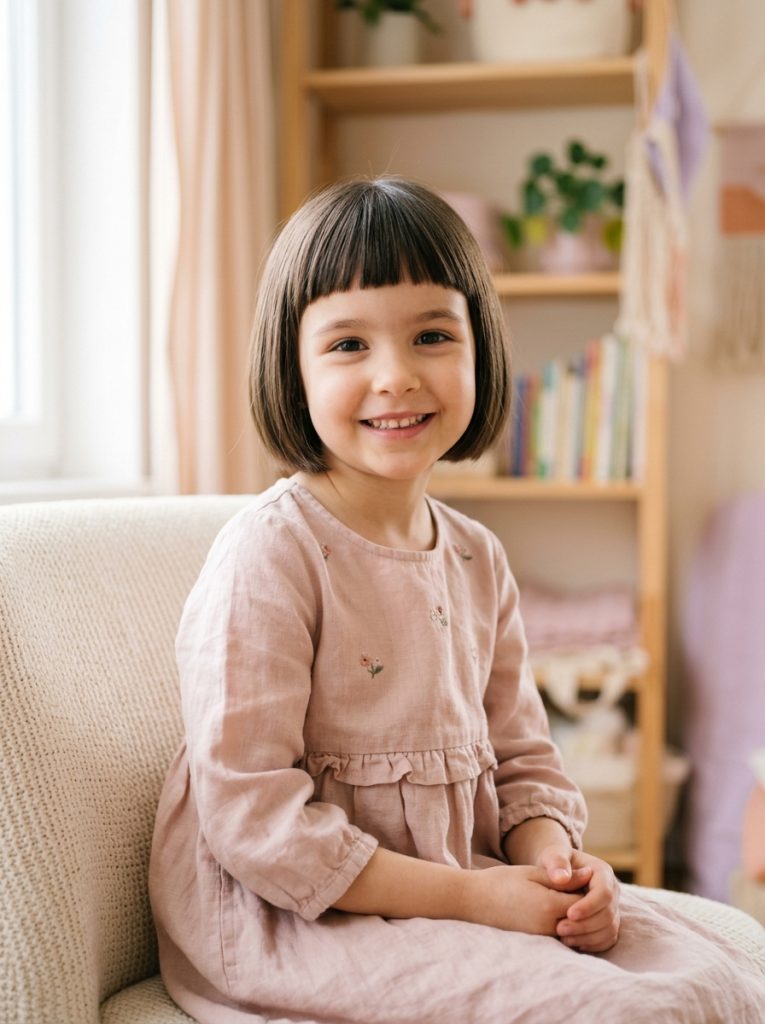
The classic French bob features a chin-length blunt perimeter combined with soft micro bangs that sit roughly one inch above the eyebrows. Begin by dampening the hair evenly and dividing it into four structured quadrants using sectioning clips. Cut the back section straight across at the jawline, keeping zero tension on the shears to accommodate natural bounce. Progress forward along the sides, connecting the length seamlessly to the front chin area. Next, isolate a horizontal triangular section at the hairline for the fringe, trimming it short and crisp across the forehead. Use texturizing shears lightly on the bang tips to remove excess weight. This style provides a charming, timeless look that requires minimal daily brushing, making it an easy project to maintain for fine, straight hair types.
A-Line Angle Bob with Arching Curtain Bangs
Setup Method
An A-Line angled bob maintains a shorter profile at the nape of the neck while gradually lengthening toward the front collarbone, paired with sweeping arching curtain bangs. Establish the angled guidelines by sectioning the hair diagonally from the crown to the back of the ears. Trim the rear section short to expose the neck line, then cut the lateral strands on a downward diagonal angle. For the curtain fringe, take a central point at the forehead and cut the strands shorter in the middle, angling them longer toward the cheekbones to blend with the side layers. This dynamic cut adds sophisticated volume to flat hair textures while keeping the face open, creating a modern design that holds its shape as the child plays.

Rounded Classic Pageboy Bob with Blunt Fringe
How to Create
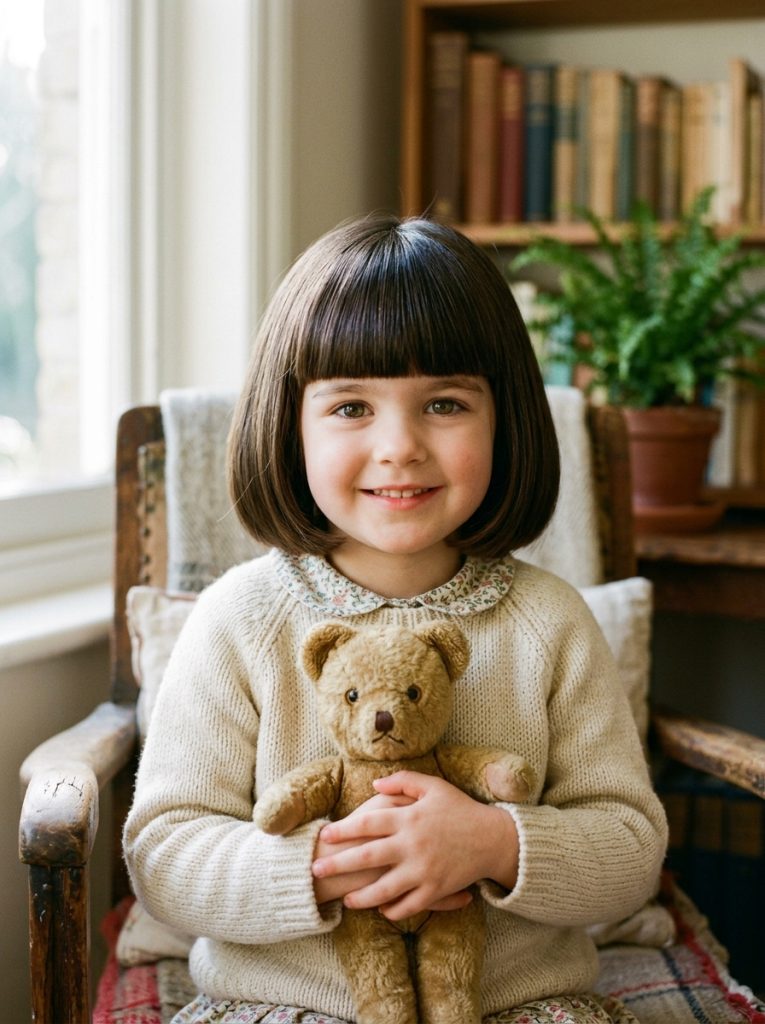
The pageboy bob relies on inward-curling ends and a full, straight-across blunt fringe to form a continuous rounded silhouette around the head. Section the hair horizontally, starting from the lower nape. Cut each layer slightly longer than the layer beneath it, creating a subtle internal graduation that forces the ends to curve inward naturally toward the neck. Trim the front bangs straight across at eyebrow level, maintaining a dense, solid horizontal line. This traditional style is ideal for children with thick, straight hair, as the internal weight distribution keeps strands neatly aligned without needing heated styling tools. Daily care involves a quick brush through to reset the smooth, curved shape effortlessly.
Layered Textured Bob with Wispy Fringe
Execution Process
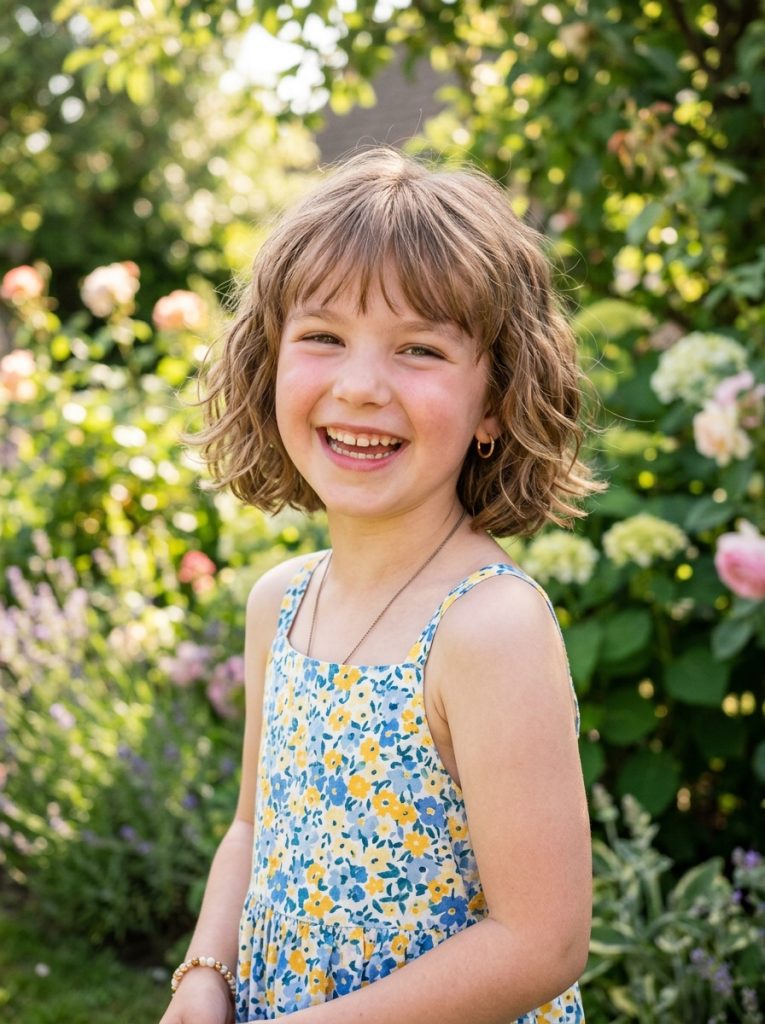
Combining loose internal layering with a soft wispy fringe, this textured bob removes heavy bulk while introducing playful movement throughout the hair. Begin by establishing a standard chin-length baseline around the entire perimeter. Lift horizontal sections around the crown to a ninety-degree angle and trim the ends using point-cutting techniques to introduce interior airiness. Isolate a thin hairline section for the bangs, cutting them wispy and slightly uneven at eyebrow level to avoid a dense barrier. This relaxed style works exceptionally well for children with wavy hair or high density, as the texturizing prevents a triangular shape. Styling simply requires scrunching a tiny spray of leave-in conditioner into damp strands for a natural finish.
Asymmetrical Chin Bob with Side-Swept Bangs
Step-by-Step Guide
The asymmetrical bob creates a modern visual dynamic by keeping one side of the hair noticeably longer than the other, complemented by soft side-swept fringe. Divide the hair with a deep side part aligned with the pupil of one eye. Trim the shorter side crisp at earlobe height, while cutting the opposite side longer so it grazes the bottom of the chin. Blend the side-swept bangs into the longer side using diagonal slide-cutting, ensuring the fringe flows smoothly across the forehead without blocking vision. This creative project offers a bold aesthetic that stays functional for school. The side part keeps hair tucked behind one ear naturally, preventing strands from falling forward during writing or drawing tasks.

Stacked Inverted Bob with Feathered Fringe
Setup Method
Featuring a heavily layered back that builds volume at the occipital bone, the stacked inverted bob pairs a dramatic rear profile with light feathered bangs. Create small horizontal partings at the nape of the neck, holding strands at a forty-five-degree angle while cutting to stack the layers vertically. Work upward toward the crown, increasing the length toward the front. Cut the fringe softly at temple width, using point-cutting to create light, feathered tips that soften the forehead line. This technical cut is perfect for fine hair that lacks natural volume, as the stacked rear layers construct structural lift naturally. The soft bangs prevent the sharp angles from looking too mature, retaining a cute finish.

Textured Curly Bob with Eyebrow-Grazing Bangs
How to Create
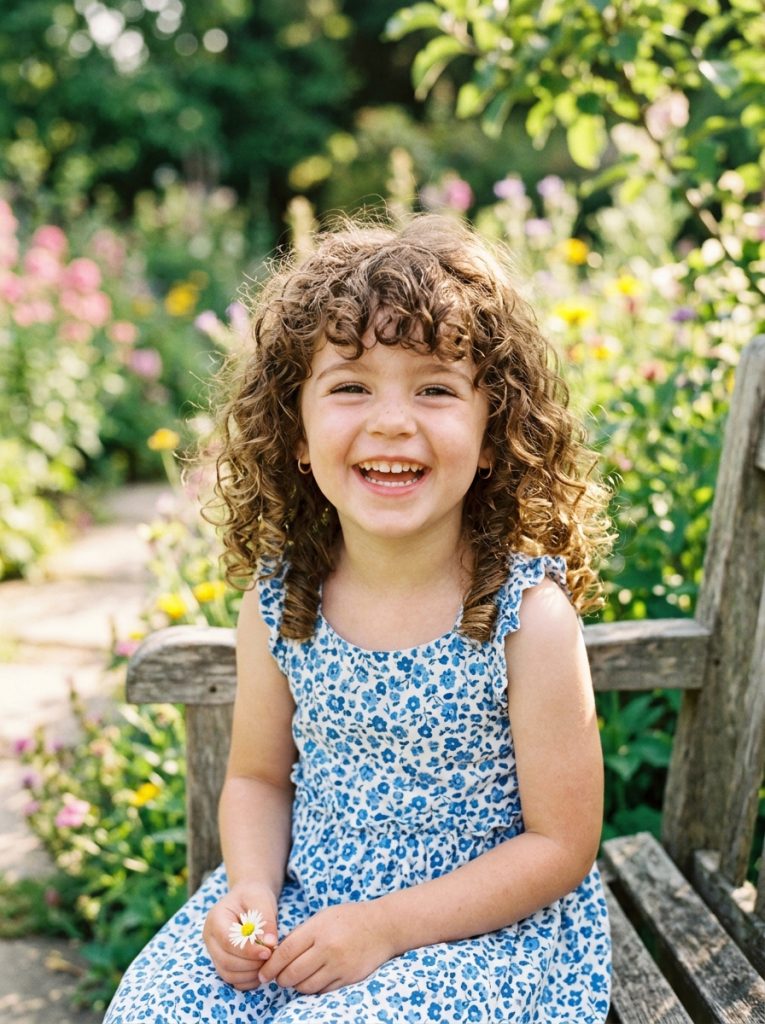
Designed specifically to enhance natural curl patterns, this bob utilizes rounded perimeter cutting and light eyebrow-grazing fringe to embrace natural texture. Always cut curly hair while dry to observe true spring length and avoid accidental over-shortening. Section the curls into natural clusters, trimming the perimeter in a soft circle around the shoulders. Cut individual bang curls right at the top of the eyebrow line, allowing space for the curls to coil upward naturally. Apply a small amount of child-friendly curl cream to define the shape without weighing down the roots. This beginner friendly approach eliminates heat styling entirely, allowing curls to air-dry into a bouncy, balanced frame that resists humidity and frizz throughout the day.
Blunt Shaggy Bob with Piecey Fringe
Execution Process
The blunt shaggy bob merges a sharp bottom edge with choppy internal layers and a light, piecey fringe for a relaxed, modern aesthetic. Establish a crisp, horizontal baseline right at the jawline using sharp shears. Once the baseline is complete, use a razor or thinning shears on the top layers to introduce choppy texture without disrupting the solid perimeter line. Cut the fringe sparse and slightly parted, allowing small gaps that show the forehead beneath. This versatile haircut works well for active kids who transition frequently between indoor schoolwork and outdoor sports. The choppy layers hide natural messiness, ensuring the style looks intentionally styled even after a full day of activity.
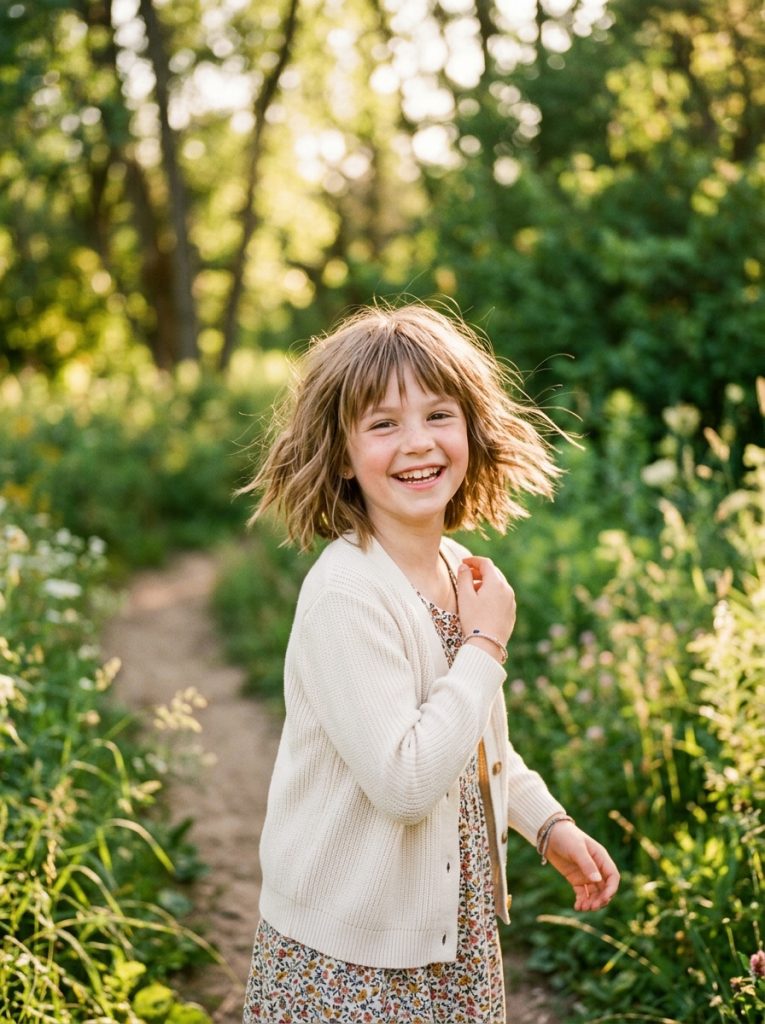
Soft Curved Lob with Swooping Fringe
Step-by-Step Guide
The long bob, or lob, extends past the chin to graze the collarbones, paired with a soft swooping fringe for a longer short-hair option. Section the hair into three horizontal tiers and cut the perimeter straight across the shoulders. Angle the front side sections slightly upward to prevent the hair from dragging on the collarbones. Cut the bangs starting from a center point, swooping them softly to one side so they sweep gently past the outer corner of the eye. This longer variation provides maximum flexibility, allowing parents to pull the hair back into small ponytails when needed while maintaining the neat appearance of a framed bob with fringe.
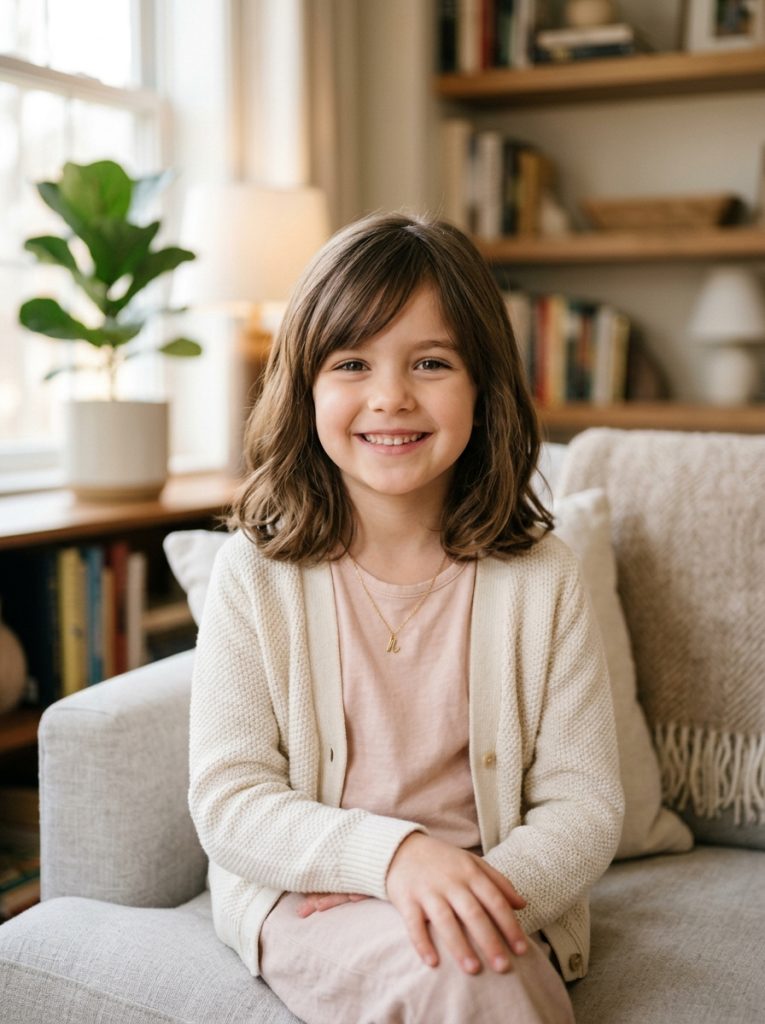
Retro Bowl-Bob Hybrid with Ultra-Short Bangs
Setup Method
Merging retro design with modern proportions, this hybrid style features a continuous curved line running from high micro bangs around to the ears, dropping into a shallow bob at the neck. Part the front section wide across the forehead, cutting ultra-short bangs two inches above the brows. Curve the cut line continuously around the temples, floating just over the top of the ears before dropping down to a short nape line. Use texturizing shears along the lower half inch to soften the heavy perimeter edge. This cut creates a distinctive, artistic look that keeps the child’s face completely uncovered, eliminating any possibility of hair falling into the eyes during play or reading.
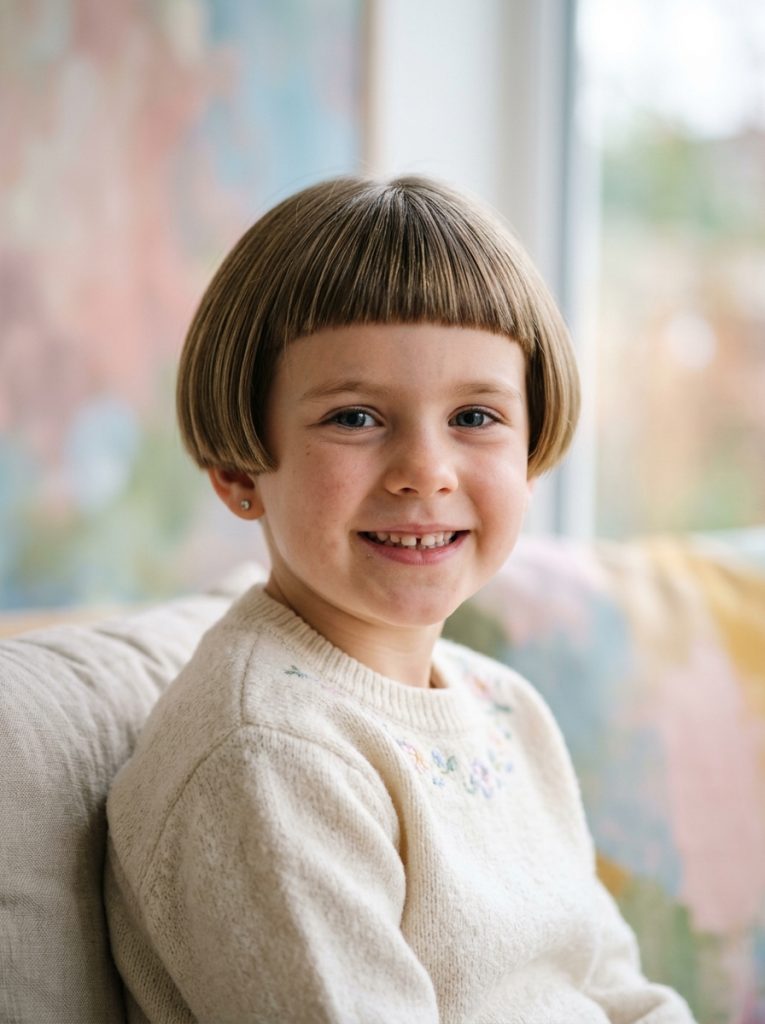
Common Beginner Mistakes and How to Avoid Them
A frequent error when cutting a bob with bangs on a child is pulling the hair with too much tension while trimming. Excessive tension stretches wet elastic strands, causing the hair to bounce up much shorter than intended once dry. Maintain minimal tension and let the hair rest naturally against the comb. Another common mistake is creating a bang section that extends too far into the sides of the head, which widens the face unnecessarily and ruins the bob’s balance. Always keep the fringe parting strictly within the outer corners of the eyebrows. Lastly, cutting bangs straight across on a child with a strong forehead cowlick will cause the hair to split open unexpectedly; always cut cowlick areas dry to see how the hair naturally falls.
Practical Tips for Better Results
Achieving professional results at home requires consistent technique and proper maintenance habits. Always perform minor trims every four to six weeks to keep the fringe clear of the child’s eyes and maintain the bob’s perimeter line. Use a wide-toothed comb on wet hair after washing, starting from the ends and moving upward to prevent breakage and scalp discomfort. When drying the bangs, sweep them back and forth with a flat paddle brush using cool air from a hairdryer to set a neutral, natural direction. Applying a small drop of lightweight leave-in conditioner spray keeps static away and preserves a smooth shine. Keeping styling sessions short and fun helps children associate hair care routines with a positive experience.
Styling, Presentation, and Organization Ideas
Styling a kid’s bob can be both creative and practical for special events or daily routines. Incorporate thin, non-slip cloth headbands to hold shorter side layers back cleanly while adding a pop of color to school outfits. Small snap clips placed right at the temples can secure growing fringe elegantly to one side. Organize all hair accessories, clips, ties, and spray bottles inside a clear acrylic desktop caddy with divided compartments to make morning choices fast and visual. Displaying colorful bows and clips neatly encourages children to participate in their morning grooming, fostering independence while keeping the bedroom vanity uncluttered. Matching accessory colors with school uniforms or seasonal outfits adds an extra touch of thoughtful presentation.
Budget and Time Planning Strategies
Choosing a structured bob with bangs offers clear long-term time and financial advantages for families. Morning styling requires less than five minutes, saving significant time during rushed school preparations compared to managing long, tangled hair. From a financial perspective, parents can reduce salon costs by performing quick fringe trims at home between full haircut appointments. Investing in one set of professional-grade hair shears pays for itself quickly by extending the time between salon visits from four weeks to ten weeks. Plan main haircut appointments ahead of major calendar events like school photo days or holiday breaks to ensure the hair looks fresh, settled, and properly proportioned without last-minute stress.
Creative Expansion and Advanced Inspiration
As the child grows, a basic bob with bangs offers smooth transition pathways into varied styles without requiring drastic changes. As the length grows out into a longer lob, parents can experiment with simple crown braids, half-up top knots, or small side twists that integrate the fringe seamlessly. Introducing subtle texturizing techniques at subsequent haircuts allows the style to evolve from a classic blunt shape into a trendy textured crop. Parents can also experiment with different fringe styles, shifting from micro bangs to curtain bangs as facial features mature. This spatial and stylistic flexibility ensures the haircut remains age-appropriate, functional, and visually appealing through every developmental stage.